Jul. 2025 – Present
Inria
Research Engineer
Sophia Antipolis, France
Protein conformational sampling, structural validation, and cross-platform scientific applications.
About
I’m Sikao Guo, a computational biophysicist and research software engineer. I develop methods to study molecular systems and the software that makes those methods usable.
At Inria, I work on protein conformational sampling and structural-validation workflows. I also created AutoCLIP, a framework for generating consistent scientific applications for PyMOL, VMD, and the web.
Previously, at Johns Hopkins University, I studied clathrin and HIV lattice assembly, developed MPI-based reaction-diffusion simulation, and built automated structure-to-simulation workflows.
My Ph.D. research at the Institute of Physics, Chinese Academy of Sciences focused on mechanochemical models of kinesin. That background in physics continues to shape how I connect molecular interactions with observable biological behavior.
Across these projects, I work from the scientific question through the algorithm, numerical validation, software interfaces, tests, and documentation.
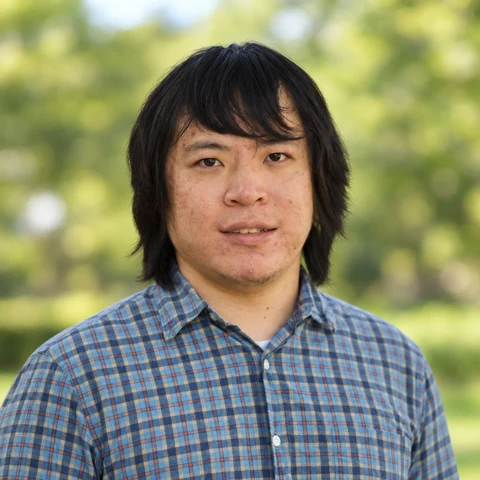
Research Engineer · Inria
Background
Research Engineer
Sophia Antipolis, France
Protein conformational sampling, structural validation, and cross-platform scientific applications.
Assistant Research Scientist (2025); Postdoctoral Fellow (2020–2024)
Baltimore, Maryland
Biomolecular self-assembly, parallel reaction-diffusion simulation, and structure-to-simulation modeling.
Doctoral Researcher
Beijing, China
Mechanochemical models of kinesin and computational studies of molecular-motor coordination.
Education
Institute of Physics, Chinese Academy of Sciences
Nankai University
Research & collaboration
I’m interested in molecular-modeling methods, biomolecular simulation, and reusable scientific software.